


When you’re dreaming of that perfect mountain getaway, you’re probably picturing the views from the deck or where the Christmas tree will go. You’re likely not thinking about where your wastewater goes.
However, in the world of mountain real estate—especially here in the San Luis Valley and the surrounding high country—understanding the difference between a municipal sewer and a private septic system is one of the most important parts of your due diligence.
If you’re coming from a city like Denver or Colorado Springs, you’re likely used to a "set it and forget it" sewer system. But up here, the rules of the game change. Let’s break down what you need to know.
1. The Municipal Sewer: The "City" Experience
If you buy a home within the city limits of Alamosa or in certain developed mountain subdivisions, might be on a public sewer.
- How it works: Your drains lead to a main line maintained by the city or a special district.
- The Pro: It’s maintenance-free for you. If there’s a backup in the main line, it’s the municipality's problem.
- The Con: If there’s a problem is in your lines, before it reaches the main line, it’s your expense. Also, you’ll have a monthly sewer bill, and you’re subject to their rate hikes.
2. The Septic System: Your Private Utility
Most true "mountain" properties or acreage homes rely on an On-site Wastewater Treatment System, commonly known as a septic system. When you own a septic, you are essentially your own utility company.
The Anatomy of a Septic System
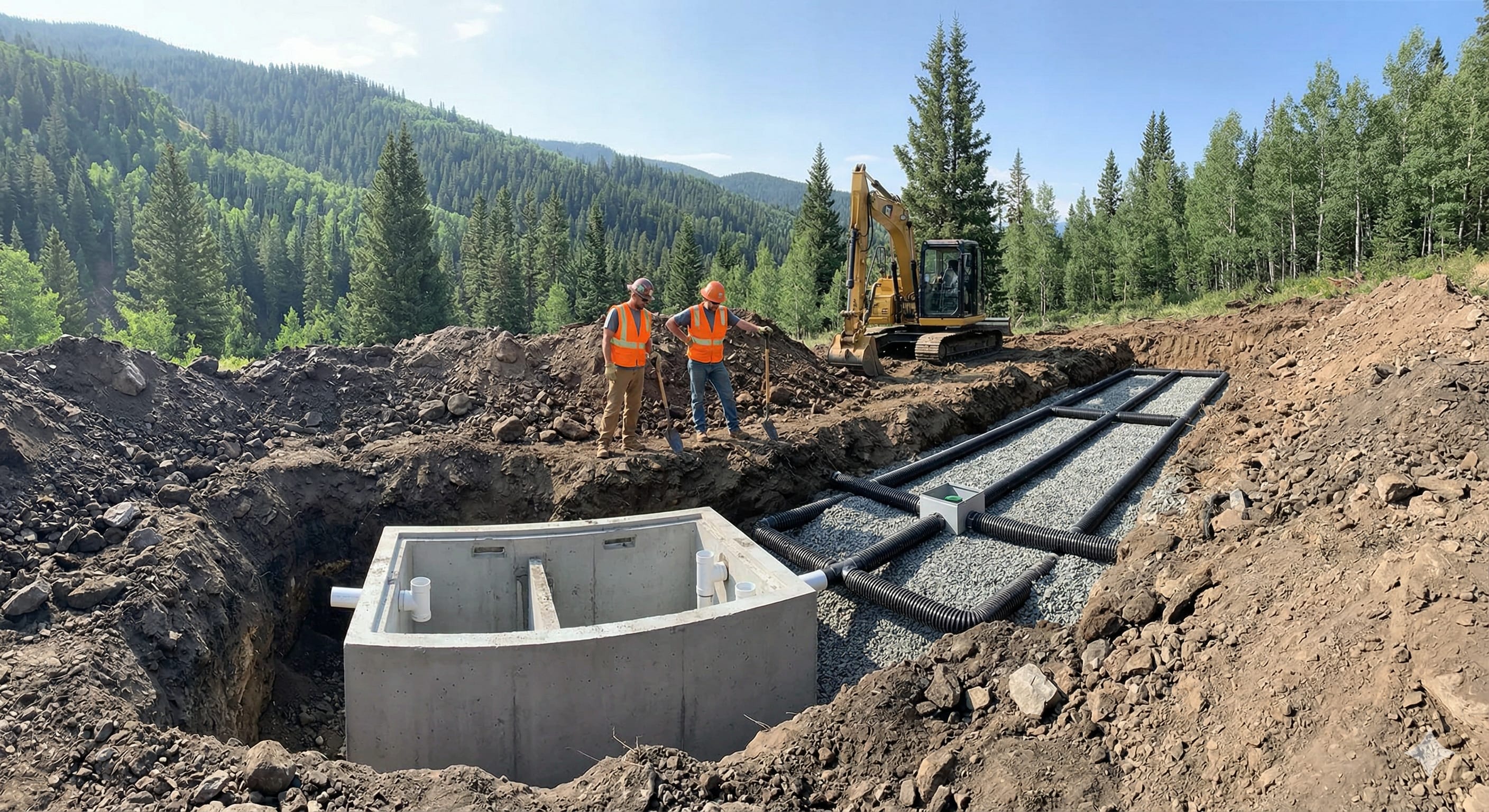
A standard gravity system consists of two main parts:
- The Tank: A buried, watertight container (usually concrete or plastic) that settles out solids.
- The Leach Field (Soil Treatment Area): A series of perforated pipes that allow the liquid (effluent) to slowly filter through the ground, where bacteria naturally purify it.
What Buyers Should Know During a Septic Tank Inspection
- Pumping Records: When was the last time the tank was cleared?
- The "Scoping" Camera: We want to see if there are tree roots or collapses in the lines.
- Soil Health: If the leach field is "saturated" or "failing," you could be looking at a repair bill ranging from $15,000 to $40,000+ depending on the terrain. That likely hood is far less in these high desert areas than in other parts of Coloado.
Living with a Septic: The Golden Rules
If you’ve never had a septic before, there is a learning curve. To keep your system happy (and your wallet full), remember these three things:
- Watch the "Three Ps": Only Pee, Poop, and (septic-safe) Paper should go down the drain.
- No Garbage Disposals: Mountain realtors generally advise against them. Food scraps don't break down well in a tank and can clog your leach field.
- Space Out the Laundry: Doing five loads of laundry on a Saturday can "flood" the system. Space them out to give the soil time to absorb the liquid.
The Bottom Line
A septic system shouldn't scare you away from your dream mountain home—it’s just a different way of living. It gives you the freedom to live further out in the wild, provided you treat it with a little respect.